India's Solar Boom Must Address the Growing Solar Waste Crisis
Introduction
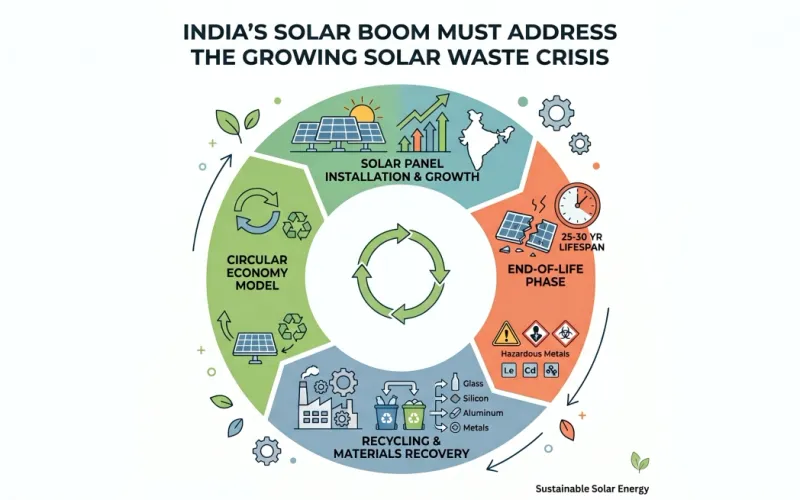
India's solar energy sector has seen exponential growth over the past decade, helping the country move closer to its renewable energy targets. However, as the industry expands, a critical challenge looms on the horizon—solar waste management. The vast number of solar panels installed today will eventually reach the end of their life cycle, leading to a surge in solar waste. If not managed properly, this waste could pose serious environmental and health hazards. It is imperative for India to take proactive steps toward responsible solar waste management before the problem escalates.
The Growing Concern of Solar Waste
Solar panels typically have a lifespan of 25–30 years, meaning that the early installations in India are beginning to reach their retirement phase. According to a 2016 report by the International Renewable Energy Agency (IRENA), the global volume of solar panel waste could reach 78 million tonnes by 2050, with India contributing nearly 4.5 million tonnes (IRENA, 2016).
This waste primarily consists of glass (76%), polymer (10%), aluminum (8%), silicon (5%), and hazardous metals like cadmium and lead (1%), requiring specialized recycling methods (IRENA, 2016). The absence of a structured framework for solar waste management means that many decommissioned panels may end up in landfills, leading to soil and water contamination. Without proper policies and recycling infrastructure, India risks negating the environmental benefits of its solar revolution.
Challenges in Solar Waste Management
- Lack of a Regulatory Framework: Unlike Europe, where stringent Extended Producer Responsibility (EPR) laws mandate proper recycling, India lacks specific policies for handling solar panel waste.
- Limited Recycling Infrastructure: India currently has very few facilities equipped to recycle solar panels, making the process costly and inefficient.
- High Recycling Costs: Extracting valuable materials from used solar panels is a complex and expensive process, leading many manufacturers and developers to discard them rather than recycle them.
- Awareness and Training Gaps: Stakeholders, including manufacturers, developers, and policymakers, need to be educated on best practices for solar waste disposal and recycling.
Government Policies on Solar Waste Management
India has taken some initial steps to address solar waste, though more comprehensive policies are needed:
- E-Waste Management Rules, 2016: While these rules govern electronic waste, they do not explicitly cover solar panels. Expanding these regulations to include solar waste could provide a structured approach to its management.
- Renewable Energy Waste Management Guidelines (Draft, 2019): The Ministry of New and Renewable Energy (MNRE) has proposed guidelines for handling renewable energy waste, including solar panels. However, these guidelines remain in draft form and need urgent implementation.
- Extended Producer Responsibility (EPR): While India has implemented EPR for e-waste and plastic waste, extending it to solar panel manufacturers could ensure proper end-of-life management.
- PLI Scheme for Solar PV Manufacturing (2021): The Production-Linked Incentive (PLI) scheme promotes domestic solar manufacturing, but integrating recycling mandates within this policy could drive sustainable practices.
- Energy Conservation (Amendment) Act, 2022: This act focuses on energy efficiency but could be expanded to include waste management obligations for solar energy producers and manufacturers.
Solutions for a Sustainable Future
1. Implementing Stronger Policies and Regulations
India needs to introduce specific regulations for solar waste management under the E-Waste Management Rules or frame independent guidelines for the industry. Mandatory recycling targets and producer responsibility obligations can incentivize manufacturers to develop sustainable disposal strategies.
2. Developing Recycling Infrastructure
The government, in collaboration with private enterprises, should invest in setting up solar panel recycling plants across the country. Incentivizing research and development in recycling technologies can also help bring down costs and improve efficiency.
3. Promoting Circular Economy in Solar Manufacturing
Encouraging manufacturers to adopt a circular economy approach—where end-of-life panels are repurposed into new products—can reduce waste generation. Research into alternative materials that are easier to recycle should also be encouraged.
4. Creating Awareness and Training Programs
Workshops and training programs should be conducted for solar EPC companies, developers, and consumers to promote responsible disposal and recycling of solar panels.
5. Public-Private Partnerships for Sustainable Waste Management
Collaborations between government bodies, private companies, and research institutions can help create a robust solar waste management ecosystem. Funding and tax incentives for companies investing in solar recycling can accelerate progress.
Conclusion
As India moves towards its ambitious renewable energy goals, it must not overlook the importance of sustainable waste management. The time to act is now—by implementing strong regulations, investing in recycling technologies, and fostering awareness, India can lead the way in responsible solar waste management. Sustainable solar energy should not just focus on generation but also on the lifecycle management of its components, ensuring a truly green future for the nation.
The success of India's solar revolution depends not just on how much energy we generate, but also on how responsibly we manage its byproducts. It’s time for policymakers, industry leaders, and individuals to come together to tackle the growing solar waste crisis.
- 🌞 Advocate for stronger solar waste policies by urging policymakers to implement Extended Producer Responsibility and enforce mandatory recycling norms.
- ♻️ Invest in recycling solutions—if you're a business, support sustainable solar practices, and if you're a consumer, choose manufacturers with clear disposal strategies.
- 📢 Raise awareness—spread the word about responsible solar waste management and push for a cleaner, greener future.
India’s renewable energy journey must be truly sustainable from start to finish. Take action today and reach us at [email protected], because a green future requires responsible choices!