Solar vs Traditional Energy: How Delhi Can Combat Air Pollution with Solar Energy Adoption
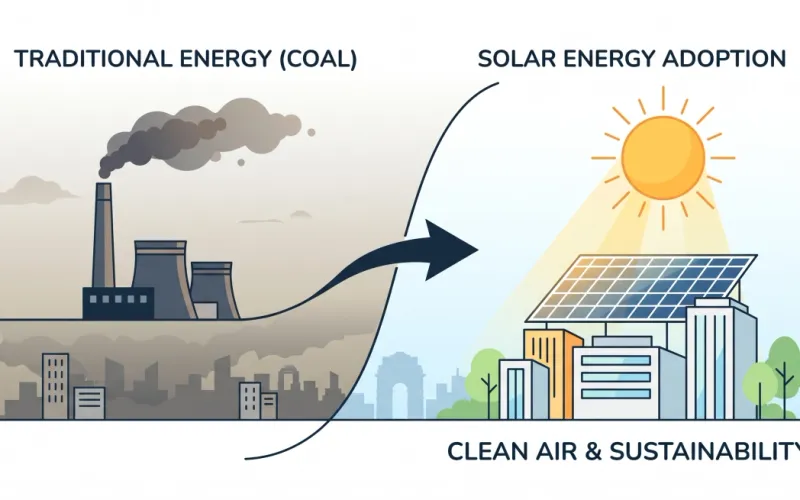
Delhi, India's capital, is infamous for its hazardous air quality, with pollution levels frequently exceeding safe limits. Traditional energy sources, such as coal and diesel, are among the major contributors to the city's air pollution crisis. As the need for sustainable solutions becomes urgent, solar energy emerges as a clean, viable alternative that can significantly reduce Delhi's carbon footprint and improve air quality.
The Air Pollution Crisis in Delhi
Delhi's air pollution is a result of multiple factors, including vehicular emissions, industrial activities, stubble burning in neighbouring states, and reliance on fossil fuels for power generation. According to a 2021 report by the Centre for Science and Environment (CSE), coal-fired power plants contribute nearly 30% of Delhi's PM2.5 pollution. Additionally, a study by IIT Kanpur found that vehicular emissions contribute around 40% of total PM2.5 levels in winter months.
How Traditional Energy Contributes to Pollution
Traditional energy sources, including coal, oil, and natural gas, release high levels of carbon dioxide (CO2), sulphur dioxide (SO2), nitrogen oxides (NOx), and particulate matter into the atmosphere. According to the Global Carbon Atlas, India's CO2 emissions from fossil fuel combustion reached approximately 2.65 billion metric tons in 2020, a significant portion of which comes from coal-based power plants. These pollutants not only degrade air quality but also lead to severe health issues, including asthma, bronchitis, and cardiovascular diseases. Additionally, the extraction and transportation of fossil fuels add further environmental damage, making conventional power generation unsustainable in the long run.
Solar Energy: A Clean Alternative
Solar energy is a renewable, clean, and abundant resource that can help Delhi transition away from polluting energy sources. By harnessing the power of the sun, solar panels generate electricity without emitting harmful pollutants. The benefits of solar energy adoption in Delhi include:
1. Reduction in Air Pollution
Solar energy systems do not release CO2, SO2, or NOx, making them a zero-emission power source. By replacing coal-based electricity with solar power, Delhi can significantly cut down on air pollutants that cause smog and respiratory diseases. According to a report by the International Energy Agency (IEA), solar energy has the potential to reduce global CO2 emissions by 6 billion metric tons annually by 2050.
2. Lower Dependence on Fossil Fuels
As solar energy adoption increases, Delhi can reduce its reliance on coal and diesel power plants, decreasing greenhouse gas emissions and contributing to cleaner air. The Ministry of New and Renewable Energy (MNRE) reported that India added 10 GW of solar capacity in 2021 alone, showing rapid growth in renewable energy adoption.
3. Sustainable and Cost-Effective
With advancements in solar technology, the cost of solar panels has significantly decreased, making it an economically viable option. The International Renewable Energy Agency (IRENA) states that the cost of solar photovoltaic (PV) modules has dropped by 89% since 2010. Government incentives and net metering policies further enhance the financial benefits of switching to solar power.
4. Energy Security and Grid Stability
Decentralized solar energy generation, such as rooftop solar installations, can reduce pressure on Delhi's electricity grid and decrease power outages. According to the Delhi Solar Policy 2016, the city aims to achieve a rooftop solar capacity of 2 GW by 2025, ensuring a stable and sustainable power supply without the risks associated with fossil fuel shortages.
Government Initiatives to Promote Solar Energy
The Indian government has launched several initiatives to accelerate solar energy adoption and combat air pollution in cities like Delhi:
- National Solar Mission (NSM): Launched in 2010, this mission aims to achieve 100 GW of solar power capacity by 2022, with Delhi playing a key role in rooftop solar adoption.
- Delhi Solar Policy 2016: This policy provides incentives for residential and commercial rooftop solar installations, with net metering to enable consumers to sell surplus power back to the grid.
- Subsidies and Financial Incentives: The MNRE offers a 30% subsidy on solar panel installations, along with soft loans and tax benefits to encourage adoption.
- Solar Parks and Large-Scale Projects: The government is developing large-scale solar parks, including the Rewa Solar Park in Madhya Pradesh, which helps supply clean energy to Delhi Metro.
- Renewable Energy Certificates (RECs): Businesses and industries can purchase RECs to meet renewable energy targets, promoting investment in solar energy projects.
Steps to Boost Solar Adoption in Delhi
To maximize the potential of solar energy in combating air pollution, the following measures should be taken:
- Government Policies and Incentives: Strengthening subsidies, tax benefits, and easy financing options for solar energy adoption.
- Expansion of Rooftop Solar: Encouraging residential and commercial buildings to install rooftop solar panels.
- Solar Parks and Large-Scale Projects: Developing large solar farms to generate clean electricity and reduce reliance on coal plants.
- Public Awareness Campaigns: Educating citizens on the benefits of solar energy and how they can contribute to a cleaner Delhi.
Conclusion
Transitioning from traditional energy to solar power is a crucial step in combating Delhi's severe air pollution problem. By embracing solar energy, Delhi can move towards a cleaner, healthier, and more sustainable future. Government support, technological advancements, and public participation are key to making this transition successful. Investing in solar energy today can ensure a greener tomorrow for Delhi and set a precedent for other cities to follow.
If you are a homeowner, business owner, or policymaker, now is the time to make the switch to solar energy. Explore solar panel installation options, take advantage of government incentives, and be part of the clean energy revolution.
Contact us at [email protected] today to learn how you can contribute to a pollution-free Delhi!